
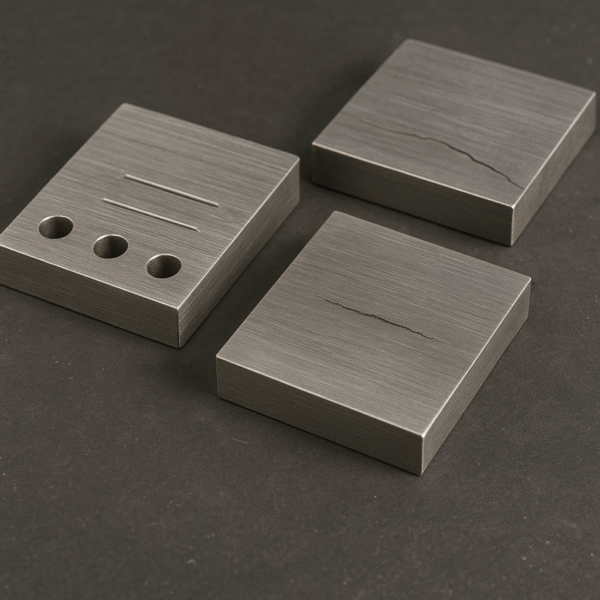
ECT (Eddy Current) Samples
Assured
Returns
Enquiry
Support
ECT (Eddy Current Testing) samples are highly specialized reference standards used to calibrate, adjust the sensitivity, and verify the performance of eddy current testing instruments.1 Since ECT signals are affected by numerous variables (material conductivity, permeability, geometry, and lift-off), using a precise reference sample is mandatory for accurate inspection.
The core principle is that the sample must acoustically and geometrically match the actual part being inspected.
Purpose of ECT Calibration Samples
ECT samples are used to:
-
Set Sensitivity (Gain and Phase): The sample contains artificial defects of known size (like EDM notches) used to adjust the instrument's gain and phase angle to achieve a distinctive, repeatable signal on the impedance plane display.
-
Verify Flaw Depth Sizing: By using samples with notches of varying, known depths, technicians can calibrate the instrument's ability to estimate the depth of a real flaw.
-
Compensate for Non-Relevant Variables: The samples help the instrument "zero out" or electronically compensate for variables that are not defects, such as material conductivity variations, probe lift-off (distance from the surface), and edge effects.
Types and Features of ECT Samples
ECT reference standards are primarily classified by the geometry of the component they are designed to inspect.
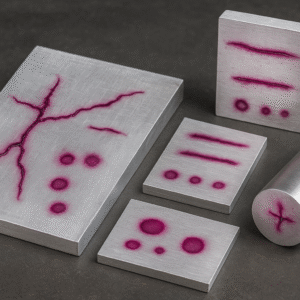
1. Flat Plate Discontinuity Samples
-
Structure: Flat plates of the same alloy (e.g., aluminum, stainless steel) with narrow, precisely machined flaws (often using Electrical Discharge Machining, or EDM notches).
-
Features: Notches are machined to specific lengths and depths, typically perpendicular to the expected grain flow.
-
Use: Calibrating surface probes and Eddy Current Array (ECA) probes for crack detection on flat surfaces (like aircraft skins).
2. Tube Discontinuity Standards
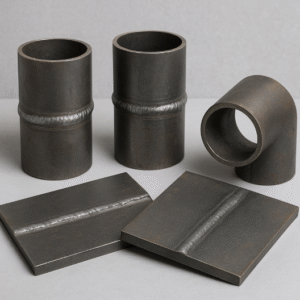
These are the most common type, used heavily in the power generation and petrochemical industries for inspecting heat exchanger tubes.
-
Structure: Sections of tube with the same diameter, wall thickness, and material (e.g., brass, titanium, Inconel, stainless steel).
-
Features: They contain various simulated flaws machined into the Outer Diameter (OD) and Inner Diameter (ID) to mimic common service damage:
-
Through-Wall Holes (TWH) or Flat-Bottom Holes (FBH): Simulate pitting corrosion.
-
Axial and Circumferential Notches: Simulate cracking (fatigue or stress corrosion cracking).
-
Gradual Thinning Bands: Simulate general wall loss or erosion.
-
-
Use: Calibrating the bobbin or rotating probes used for tube inspection.
3. Conductivity Standards
-
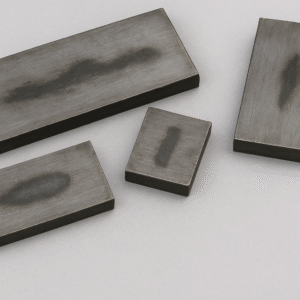
Structure: Solid blocks, usually non-ferromagnetic (e.g., aluminum alloys), with certified, highly accurate electrical conductivity values.
-
Purpose: Used to calibrate conductivity meters and to check for material property variations, such as ensuring the correct heat treatment condition or identifying metal grade/alloy type.
Governing Standards
The manufacture and use of ECT calibration samples are governed by several standards, often specific to the industry or component:
-
ASTM E215 and ASTM E243: Practices for the electromagnetic testing of seamless aluminum and copper alloy tubes, respectively.
-
ASTM E426: Practice for examining stainless steel tubular products.
-
ASME Section V: Mandates that the calibration standard must be acoustically and geometrically equivalent to the test object and contain artificial discontinuities that are as representative of actual flaws as practical.
No Reviews Yet
Be the first to share your experience with this product.
Get a Quote for ECT (Eddy Current) Samples
Our NDT specialists will respond within 24 hours with pricing, specifications, and lead times. For urgent requirements, reach us directly via WhatsApp or phone.