
ASTM Test bar
Assured
Returns
Enquiry
Support
ASTM Test Bar: The Master Performance Indicator in MPI
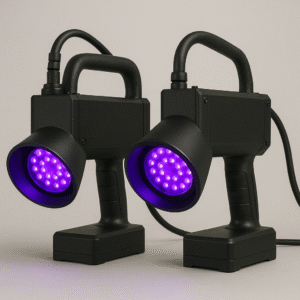
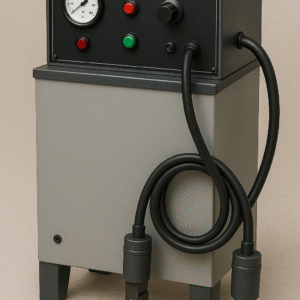
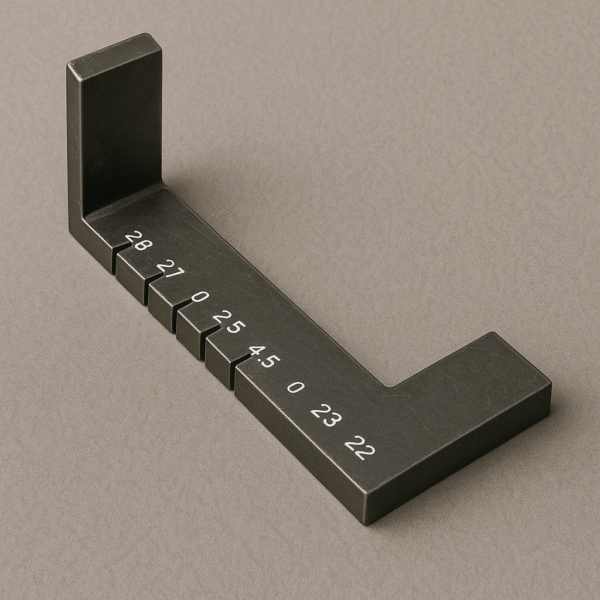
The ASTM Test Bar, also formally known as the Magnetic Particle System Performance Check Tool (as defined by ASTM E1444), is a standardized reference specimen used to quantitatively verify the overall performance and sensitivity of an entire Magnetic Particle Inspection (MPI) system. It serves as the ultimate "master check" to ensure all variables—magnetization, particle concentration, UV light intensity, and viewing conditions—are functioning correctly together.
Design and Purpose
The design of the ASTM Test Bar ensures it provides a robust, real-world assessment of the MPI system's ability to detect defects:
-
Material: It is made from a specified ferromagnetic material with consistent magnetic properties.
-
Controlled Defects: The bar contains multiple machined subsurface flaws of various sizes, typically created by grinding slots or shallow holes into the test material before it is plated over. These flaws are designed to simulate both longitudinal and transverse cracks.
-
Plating: The test bar is plated (e.g., with nickel or chrome) to seal the surface and prevent the magnetic particles from accumulating in the machined flaw grooves directly. This forces the particles to be attracted only by the flux leakage created when the bar is correctly magnetized, mimicking a real subsurface defect.
Verification Usage
The Test Bar is typically used for two critical checks:
-
Longitudinal Field Check: The bar is placed in the magnetizing coil or between the head and tailstock, and the current is applied. The operator checks for clear indications on the flaws that are oriented perpendicular to the induced field (longitudinal magnetization).
-
Circular Field Check: The current is passed directly through the bar (circular magnetization), and the operator checks for clear indications on the flaws that are oriented perpendicular to the current flow (transverse defects).
Importance in Compliance
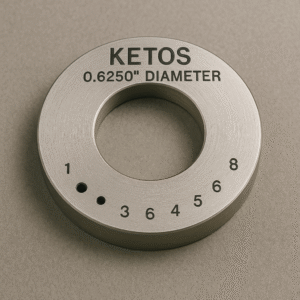
Unlike the Pie Gauge (which is a quick field direction check) or the Ketos Ring (which primarily checks circular field strength), the ASTM Test Bar checks the complete inspection procedure:
-
Holistic System Check: It verifies the combined effectiveness of the magnetizing technique, the clarity and concentration of the magnetic medium, and the efficacy of the UV light/viewing conditions.
-
Quantitative Performance: ASTM E1444 requires inspectors to produce clear indications of a minimum number of the test bar's defects (e.g., the smallest detectable flaws) at a specified magnetizing current. This provides a quantitative, traceable record of the system's sensitivity.
-
Regulatory Requirement: Use of the ASTM Test Bar is often a mandatory daily or shift-start requirement in highly regulated industries (e.g., aerospace, nuclear, or military) to prove system compliance before inspecting critical components.
No Reviews Yet
Be the first to share your experience with this product.
Get a Quote for ASTM Test bar
Our NDT specialists will respond within 24 hours with pricing, specifications, and lead times. For urgent requirements, reach us directly via WhatsApp or phone.