
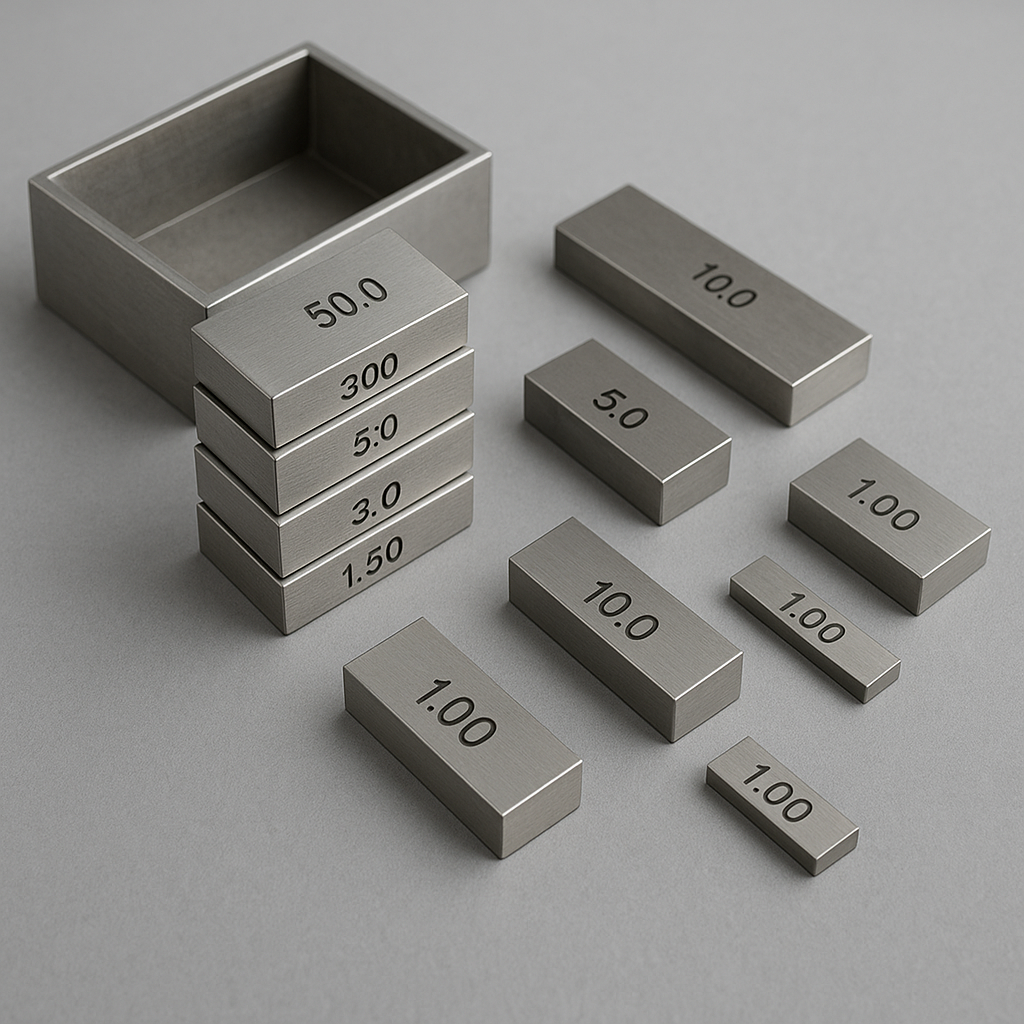
Slip Gauge Blocks
Description
Slip Gauge Blocks: The Ultimate Standard for Length
Slip Gauge Blocks, also commonly known as Gauge Blocks or Jo Blocks (after their inventor, Carl Edvard Johansson), are the primary standard for calibrating and verifying linear dimensions in manufacturing, quality control, and metrology labs globally. They are used to accurately “build up” or set any required length measurement within their operational range.
Design and Construction
Slip gauges are precision-lapped metal or ceramic blocks of rectangular or square cross-section, where the distance between the two opposing measuring faces is precisely controlled.
-
Material: They are typically made from hardened, high-carbon, high-chrome steel or Zirconia ceramic. Ceramic blocks are gaining popularity due to their superior hardness, wear resistance, and near-zero thermal expansion.
-
Wringing: The defining characteristic is the extreme flatness and smoothness of the measuring faces. When two clean blocks are slid together with a slight twisting motion, they adhere strongly due to a combination of molecular adhesion and atmospheric pressure (a phenomenon called wringing). This wringing ensures that the combined length of the stacked blocks is exactly equal to the sum of their individual lengths.
-
Calibration: Each block’s exact thickness is precisely calibrated to an international standard, making them the reference standard for the length unit in workshops.
Accuracy and Grades
Slip gauges are manufactured to extremely fine tolerances, classified into specific accuracy grades according to standards like ISO 3650 or ASME B89.1.9:
| Grade | Common Name | Typical Application | Tolerance (Example) |
| Grade K (Calibration) | Master Calibration Grade | Reference standards for calibrating other gauges | Tightest tolerance |
| Grade 0 | Inspection Grade | High-precision setting of measuring instruments | Very tight tolerance |
| Grade 1 | Workshop/Toolroom Grade | Setting limits on limit gauges, machine tools | General tight tolerance |
| Grade 2 | Workshop Grade | General purpose calibration and setting | Looser tolerance |
Applications
Slip gauge sets are highly versatile and are primarily used for:
-
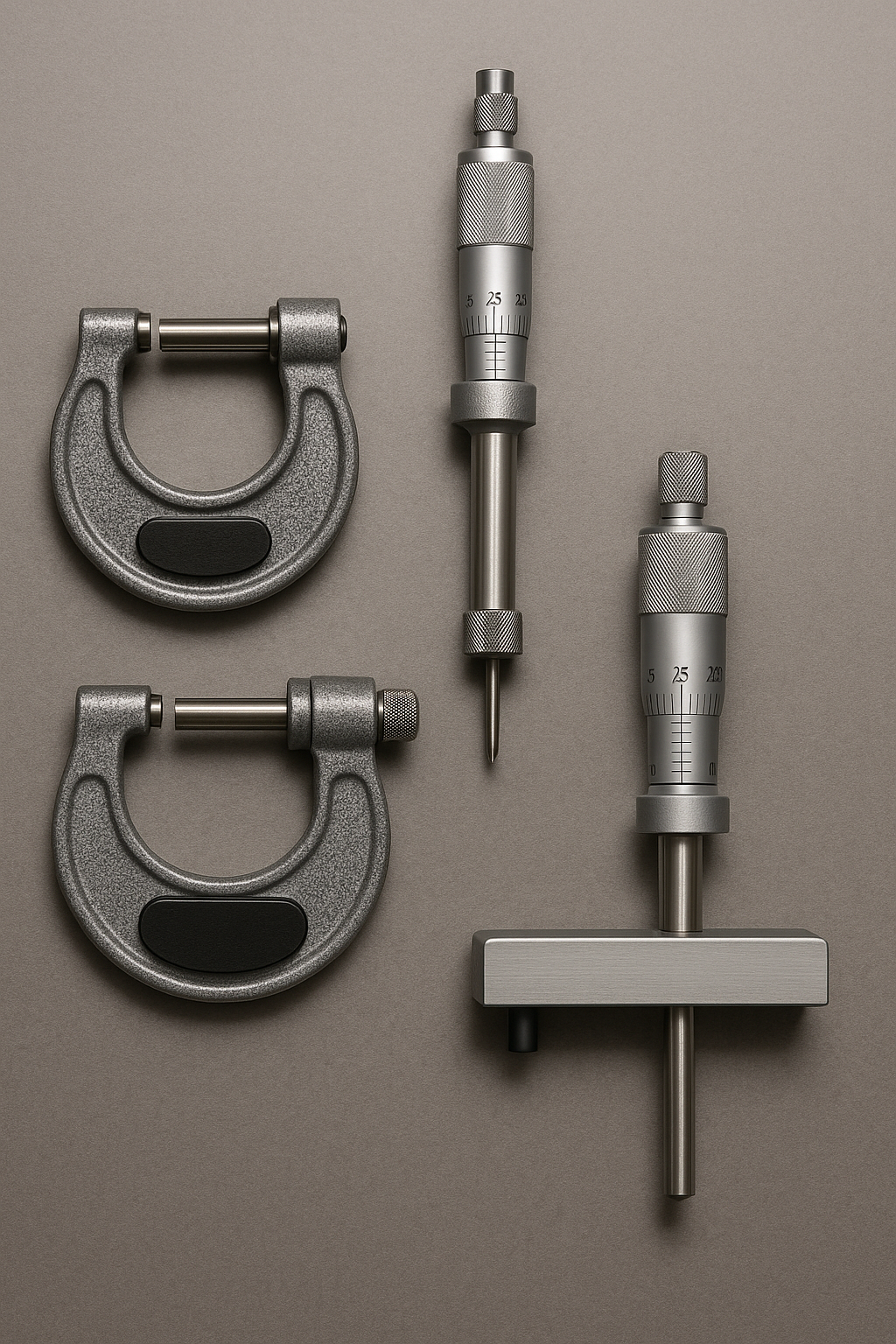
Setting Micrometers and Calipers: Used to verify the accuracy of the micrometer or caliper at a specific point on its scale.
-
Calibrating Limit Gauges: Used to set the gap between the jaws of snap gauges or functional gauges.
-
Transferring Dimensions: Used with dial indicators or height gauges to transfer a known, precise dimension from the surface plate to a workpiece.
-
Angle Measurement: A specialized set of angle gauge blocks can be wrung together to achieve virtually any required angle.
A standard set typically contains $81$ or $103$ pieces, allowing an inspector to assemble thousands of different lengths in small increments .
Reviews
There are no reviews yet.