
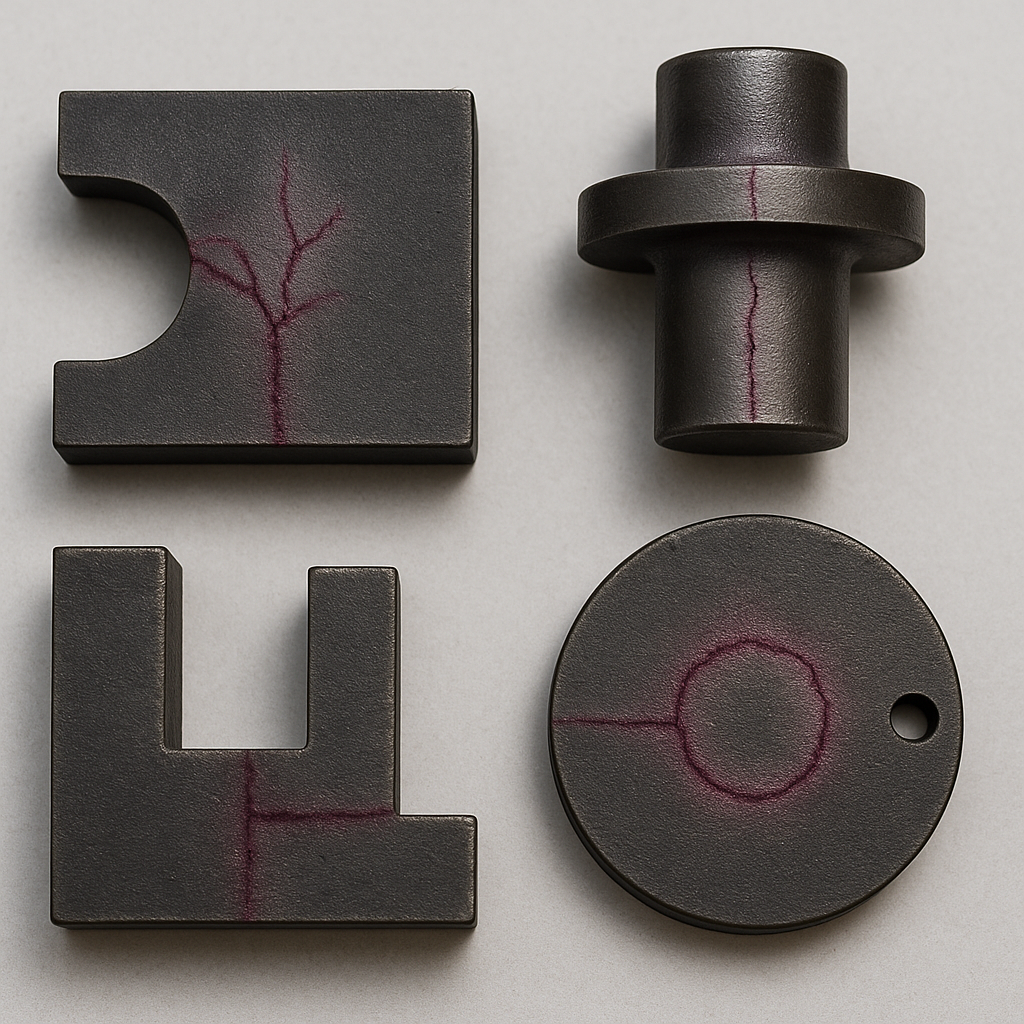
MPI (Magnetic Particle) Samples
Description
MPI (Magnetic Particle Inspection) Samples
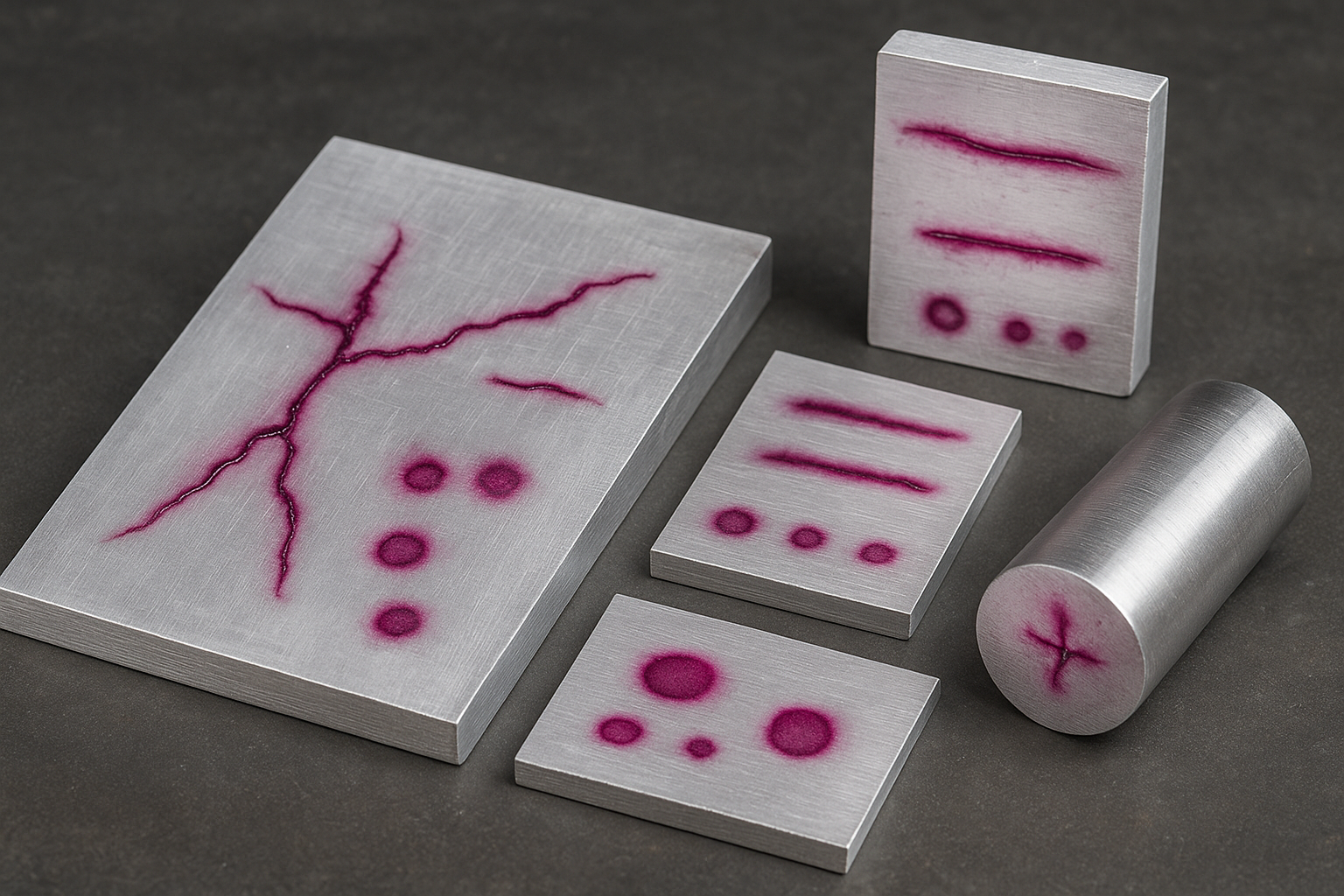
MPI (Magnetic Particle Inspection) samples, also known as reference standards or test pieces, are crucial tools used to verify the performance, sensitivity, and accuracy of the magnetic particle testing process.1 They contain known, artificial defects that allow technicians to ensure the entire system—the magnetic field, the inspection medium (particles), and the procedure—is working correctly.
Primary Purpose of MPI Samples
MPI samples serve three main functions:
-
System Performance Check (Daily Check): Used to quickly confirm that the equipment is generating the necessary magnetic field strength and that the magnetic particles are responding correctly. This is often required at the beginning of every shift or after system maintenance.
-
Sensitivity Assessment: Used to verify that the MPI process can reliably detect surface and near-surface flaws of a specific size or type, ensuring the procedure meets code requirements.
-
Procedure and Personnel Qualification: Used to train technicians and prove that a written MPI procedure is effective on a component of a specific geometry and material.
Key Types of MPI Samples
MPI samples are categorized based on their complexity and the specific parameter they are designed to check.
1. Pie Gauge (Magnetic Field Direction Check)
-
Structure: A thin, circular piece of ferromagnetic material divided into eight or twelve wedge-shaped segments separated by non-magnetic material (like brass). These segments are welded together, forming non-relevant indications that run radially from the center.
-
Purpose: To quickly determine the direction of the magnetic field being applied to a part. The magnetic particles will only cluster along the flaws that are perpendicular to the magnetic field. By noting which indicators are visible, the technician confirms the field orientation.
-
Note: The Pie Gauge is only a field direction check; it cannot be used to determine the field strength.
2. Burmah-Castrol Strips (Magnetic Field Strength Check)
-
Structure: Thin, highly permeable strips (often steel) that contain three parallel grooves or simulated defects of varying depths (e.g., $0.002″, 0.004″, 0.007″$). The strips are placed onto the test piece under the magnetic yoke or coil.
-
Purpose: The primary tool for checking magnetic field strength and particle sensitivity on a component. When magnetized, the flaws on the strip’s underside generate leakage flux that the particles reveal. By ensuring that the deepest specified flaws are indicated, the technician verifies the system’s sensitivity.
3. Ketos Ring (Circumferential Magnetization Check)6
-
Structure: A steel ring with twelve equally spaced holes drilled through its thickness near the circumference.
-
Purpose: Used to verify the effectiveness of central conductor (or circumferential) magnetization. A central conductor is passed through the ring, and the required current is applied. The test confirms the current level is sufficient if the magnetic particles form clear indications around a specified number of the holes.
4. Cracked Test Pieces (Flawed Samples)
-
Structure: Actual components (e.g., weldments, flanges, shafts) or simple blocks that have been intentionally cracked (e.g., by thermal shock, grinding, or fatigue) to create genuine, surface-breaking flaws of known size.
-
Purpose: Used for detailed procedure qualification and personnel certification to ensure the technique can detect realistic flaws in complex geometries.
Standards
The use of MPI samples is mandated by industry standards, which specify when and how the performance checks must be conducted:
-
ASTM E1444: Standard Practice for Magnetic Particle Testing.
-
ASTM E709: Guide for Magnetic Particle Testing.
-
ASME Section V: Mandates the use of qualified reference standards for both system and procedure verification in code applications.


Reviews
There are no reviews yet.