
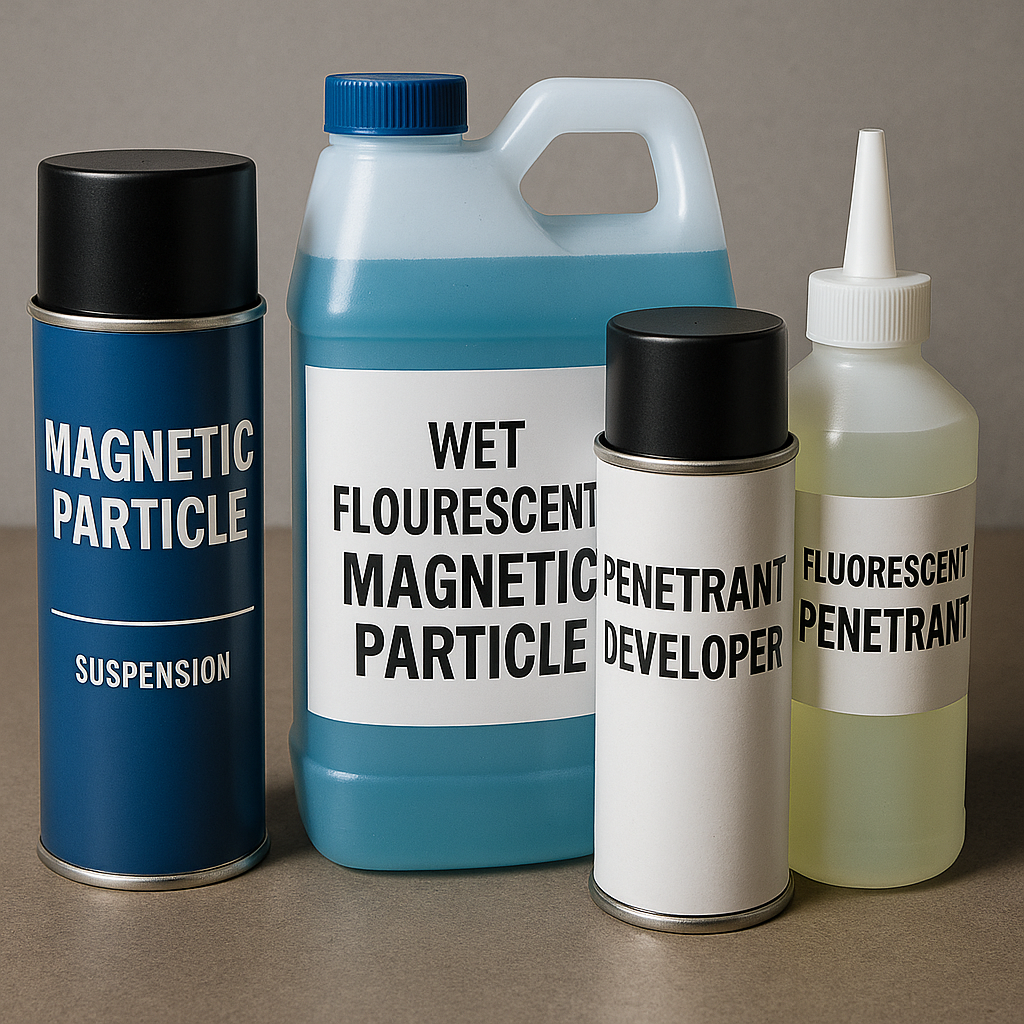
MPI chemicals
Description
MPI Chemicals: The Consumables for Flaw Detection
MPI Chemicals refer to the essential magnetic media and preparation materials used in the Magnetic Particle Inspection (MPI) process. These consumables are crucial as they create the visible indications over defects.
Magnetic Media (The Particles)
The core chemicals are the magnetic particles themselves. These are fine, highly permeable, ferromagnetic materials designed to be strongly attracted to the magnetic leakage fields over discontinuities.
| Type | Appearance | Application | Ideal Use Case |
| Dry Powders | Colored powder (red, black, yellow) | Applied using a powder blower or bulb. | Rough surfaces, elevated temperatures, remote inspections. |
| Wet Concentrates | Highly refined particles suspended in oil or water. | Applied via a recirculating hose system or aerosol. | Smooth surfaces, production line inspection, high sensitivity required. |
| Fluorescent | Particles coated with a dye that glows under UV light. | Wet method only (usually). | High-sensitivity inspection, critical components, dark room viewing. |
| Non-Fluorescent | Naturally colored (black or red). | Wet or dry method. | General inspection, daylight/high ambient light conditions. |
Pre- and Post-Inspection Chemicals
In addition to the particles, several other chemicals are used to prepare the surface and enhance inspection:
-
Cleaners/Solvents: Used to remove grease, dirt, paint, or scale from the test surface before magnetization. Proper cleaning is vital, as contaminants can mask defect indications.
-
Contrast Paint/Lacquer: A thin, white coating applied to the test surface before using non-fluorescent (visible) wet or dry black powders. The white background significantly increases the contrast against the dark particles, making indications clearer.
-
Carrier Fluids: For wet concentrates, the particles are suspended in a low-viscosity, non-magnetic liquid—either highly refined mineral oil (oil-based system) or water (water-based system). Water-based systems require wetting agents (surfactants) and often corrosion inhibitors to protect the equipment and the component.
The selection of the correct chemical system (fluorescent vs. non-fluorescent, wet vs. dry, oil vs. water carrier) is determined by the component geometry, surface condition, operating temperature, and the required sensitivity level stipulated by the applicable industry standard.


Reviews
There are no reviews yet.