
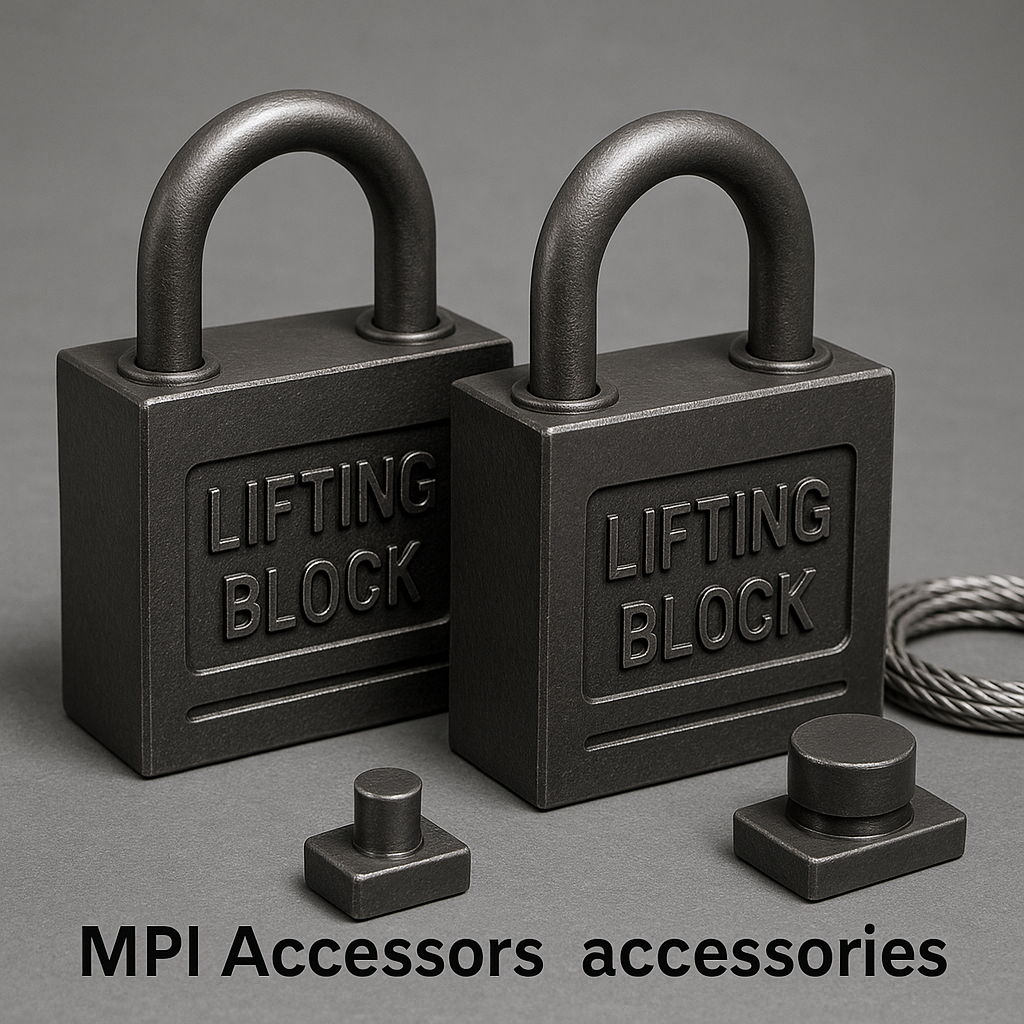
Lifting blocks
Description
Lifting Blocks: Safety and Efficiency in Heavy Lifting
In the context of industrial applications and heavy machinery (like the excavators and NDT equipment discussed previously), Lifting Blocks (also known as Hoisting Blocks or Snatch Blocks) are essential mechanical devices used to lift, lower, or pull heavy loads safely and efficiently.
Design and Function
Lifting blocks combine a sturdy housing (the block) with one or more sheaves (pulleys) and a hook or shackle for attachment. Their primary functions are threefold:
-
Mechanical Advantage: By using a system of multiple ropes (or cables) and sheaves, a block and tackle system dramatically reduces the force required to lift a load. The mechanical advantage is approximately equal to the number of rope parts supporting the load. For instance, a block with three sheaves can effectively reduce the necessary pulling force by nearly six times (due to the six lines supporting the weight).
-
Direction Change: A simple lifting block allows the operator to change the direction of the pulling force. This is critical when pulling a heavy load horizontally or when the power source (like a winch or crane) cannot be positioned directly above the object being lifted.
-
Load Distribution: They help distribute the heavy load across multiple parts of the rigging, reducing stress on the rope and the lifting source.
Key Specifications
Lifting blocks are critical safety components and must be rated and used according to strict standards:
-
Working Load Limit (WLL): The maximum weight the block is certified to handle under normal conditions. This must never be exceeded.
-
Sheave Diameter: Larger sheaves reduce stress and wear on the rope or cable.
-
Safety Factor: All certified blocks are designed with a substantial safety factor (often 4:1 or higher) above the WLL to account for shock loading and wear.
Applications
-
Construction & Maintenance: Used with cranes, derricks, or winches to lift steel beams, machinery, or components.
-
Rigging: Essential for complex rigging operations where space is limited or where precise control over the lift angle is required.
-
Material Handling: Used to lift heavy industrial components during manufacturing or maintenance, such as changing an engine block on an excavator or installing large NDT equipment.



Reviews
There are no reviews yet.