
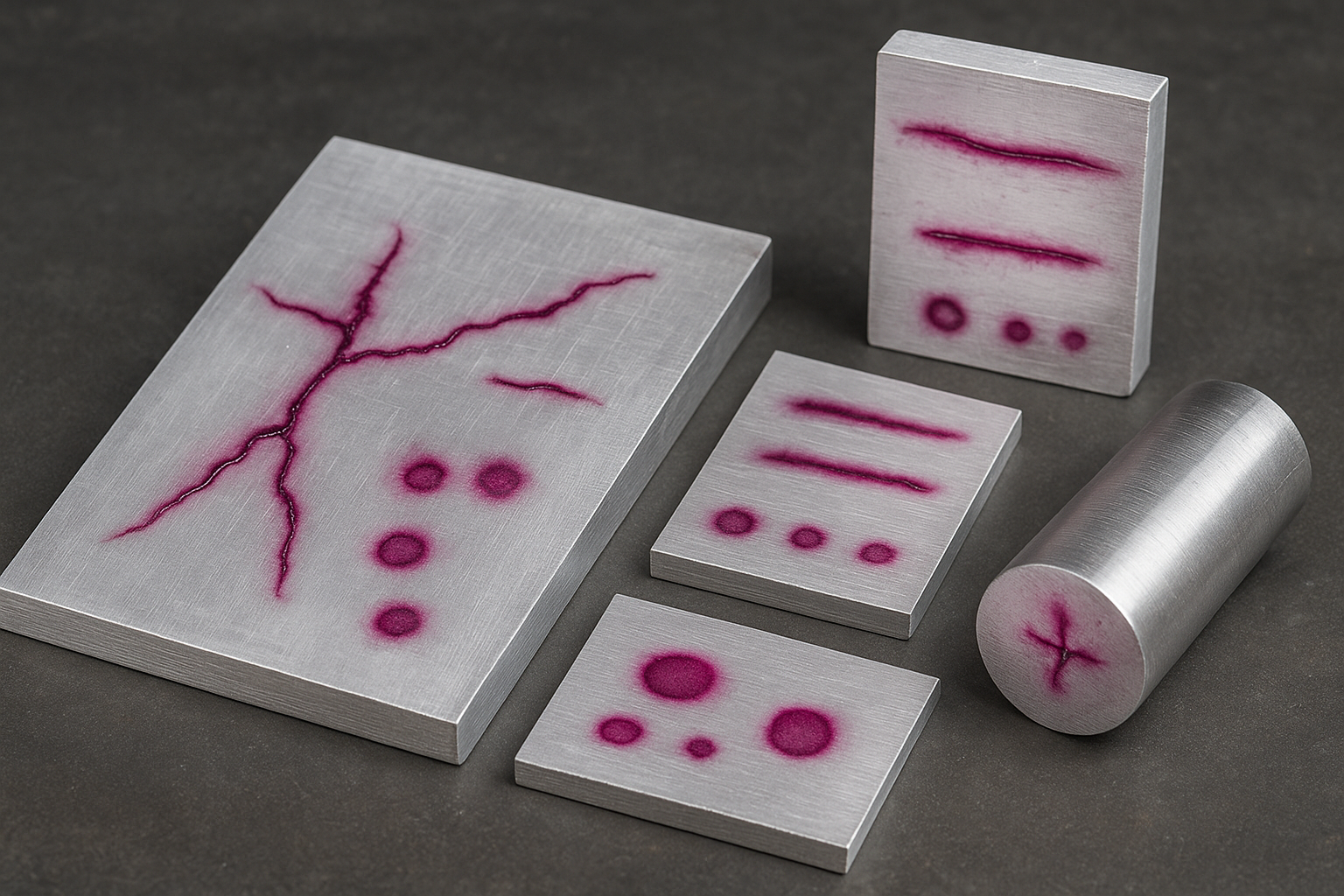
FPI (Dye Penetrant) Samples
Description
FPI (Fluorescent Penetrant Inspection) samples (also known as Liquid Penetrant Testing, or LPT samples) are reference standards used to verify the functionality of the penetrant inspection process and demonstrate the required sensitivity for detecting surface-breaking flaws.
Since FPI is a non-quantitative test (it doesn’t directly measure flaw size, only its presence), the samples are crucial for ensuring the entire chemical process is working correctly.
FPI Calibration and Verification Samples
FPI utilizes a sequence of chemicals (penetrant, remover, developer) that must be strictly controlled according to standards like ASTM E1417 and ISO 3452-3. Calibration blocks are used for process control rather than flaw sizing.
1. TAM Panel (Type 1 or PSM 5 Panel)
This is one of the most common and robust verification tools.
-
Structure: A flat panel (often stainless steel) that is chrome-plated and then intentionally cracked (e.g., thermal shock) to create a set of fine, natural crack indications of varying widths and depths.
-
Purpose: Used for a quick, daily, or shift check of the entire FPI process:
-
Penetrant Sensitivity: Ensures the penetrant can enter the fine cracks.
-
Remover Effectiveness: Confirms that excess penetrant can be removed from the smooth surface without pulling the penetrant out of the cracks.
-
Developer Performance: Verifies the developer provides adequate contrast and “blotting” action to pull the dye out of the flaws.
-
2. Sensitivity Comparison Panels (e.g., Twin KDS Panels)
-
Structure: A pair of nearly identical panels made from the same material (e.g., aluminum or stainless steel) with matching crack patterns created by thermal stress or fatigue.
-
Purpose: To directly compare the performance of two different penetrant materials (e.g., a new batch vs. an in-service batch) or two different processes to ensure they meet the minimum required sensitivity level (Level 2, 3, or 4).
3. Ni-Cr Crack Panels (ISO 3452-3 Type 1 Reference Blocks)
-
Structure: These reference blocks use a thin layer of nickel and chromium plated onto a base material. Cracks are generated in the plating layer, creating a precise, known crack pattern.
-
Purpose: Used for quantitative control of the resolution and sensitivity of the penetrant system. Different sensitivity levels (e.g., $1/2, 1, 2, 3$) correspond to different crack depths and widths.
FPI Flawed Samples (Demonstration Blocks)
These are used for training and certification to mimic real-world inspection challenges.
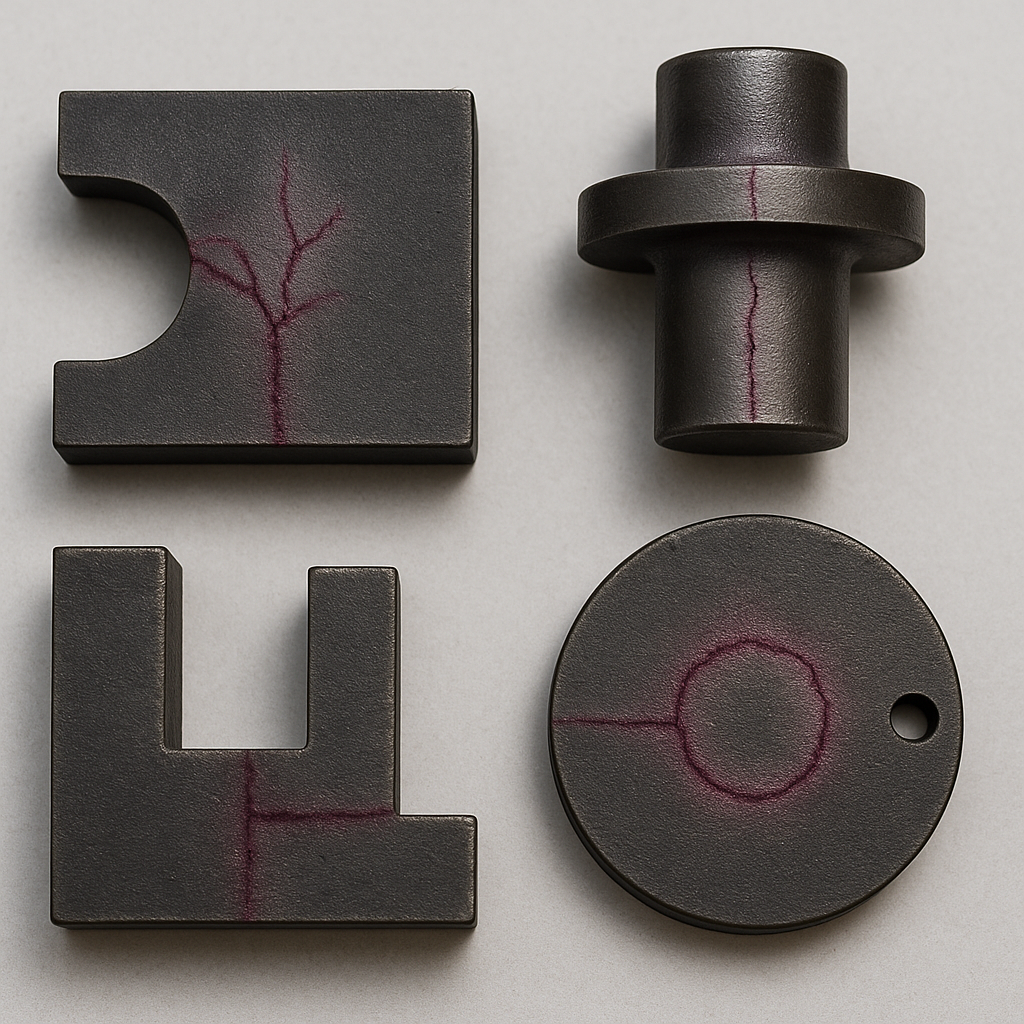
1. Component-Specific Flawed Parts
-
Structure: Actual or mock-up parts like turbine blades, castings, or welded joints that have been processed to include genuine surface-breaking flaws (cracks, laps, seams) resulting from the manufacturing process.
-
Purpose: To train technicians on how flaws manifest in components with complex geometry and to qualify a procedure for a specific part geometry, ensuring reliable defect detection.
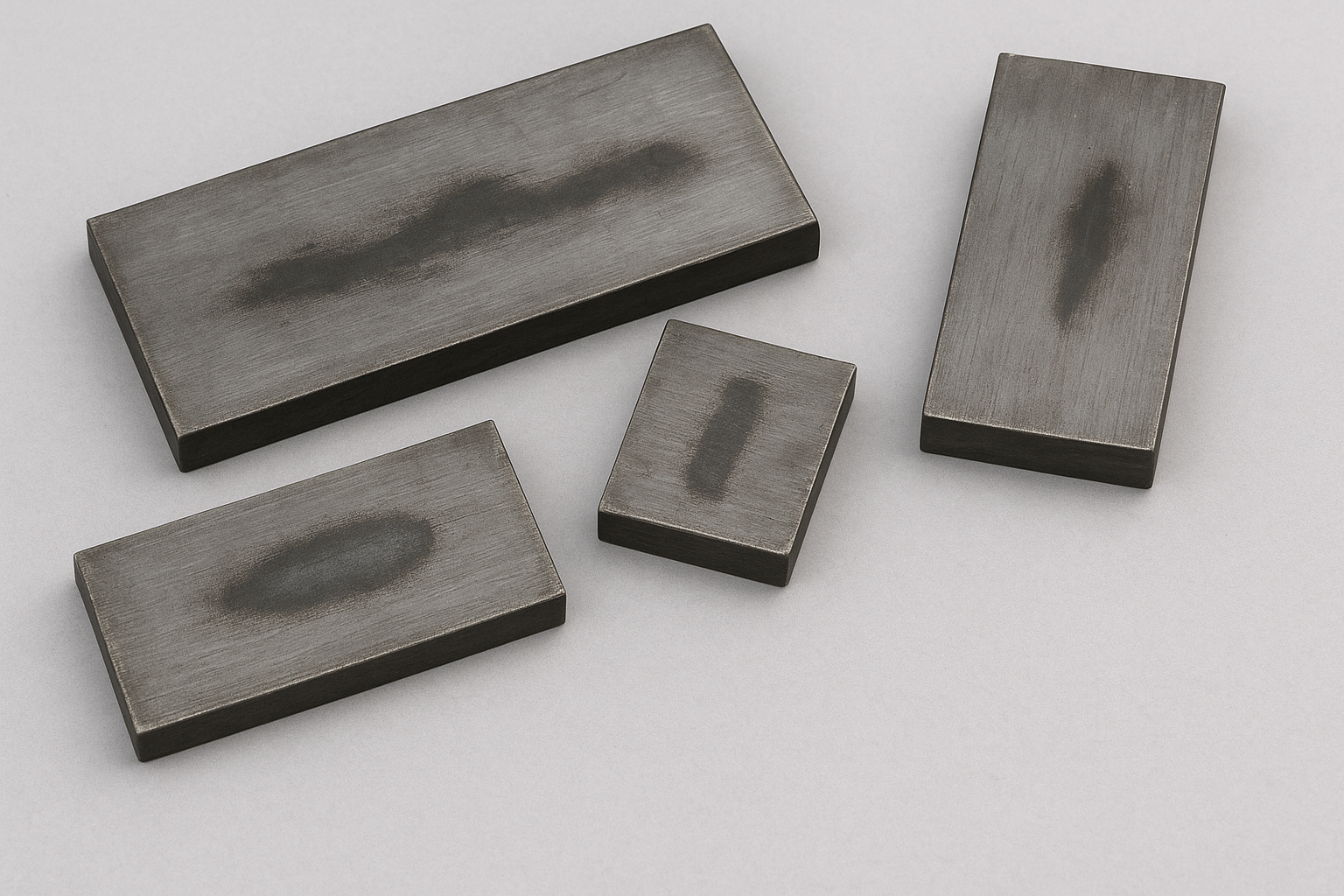
2. Test Panels with Material Smear
-
Structure: Samples that have been intentionally subjected to a mechanical process (like machining, grinding, or sanding) that smeared the metal surface, partially or completely closing off surface flaws.
-
Purpose: Used to demonstrate that an essential pre-cleaning step, such as chemical etching, is necessary to remove the smeared metal and open the flaws back up for the penetrant to enter.
FPI samples are essential because the success of the inspection relies entirely on the capillary action of the penetrant and the blotting action of the developer.4 The reference blocks ensure these physical and chemical principles are working optimally under the required inspection conditions.


Reviews
There are no reviews yet.