
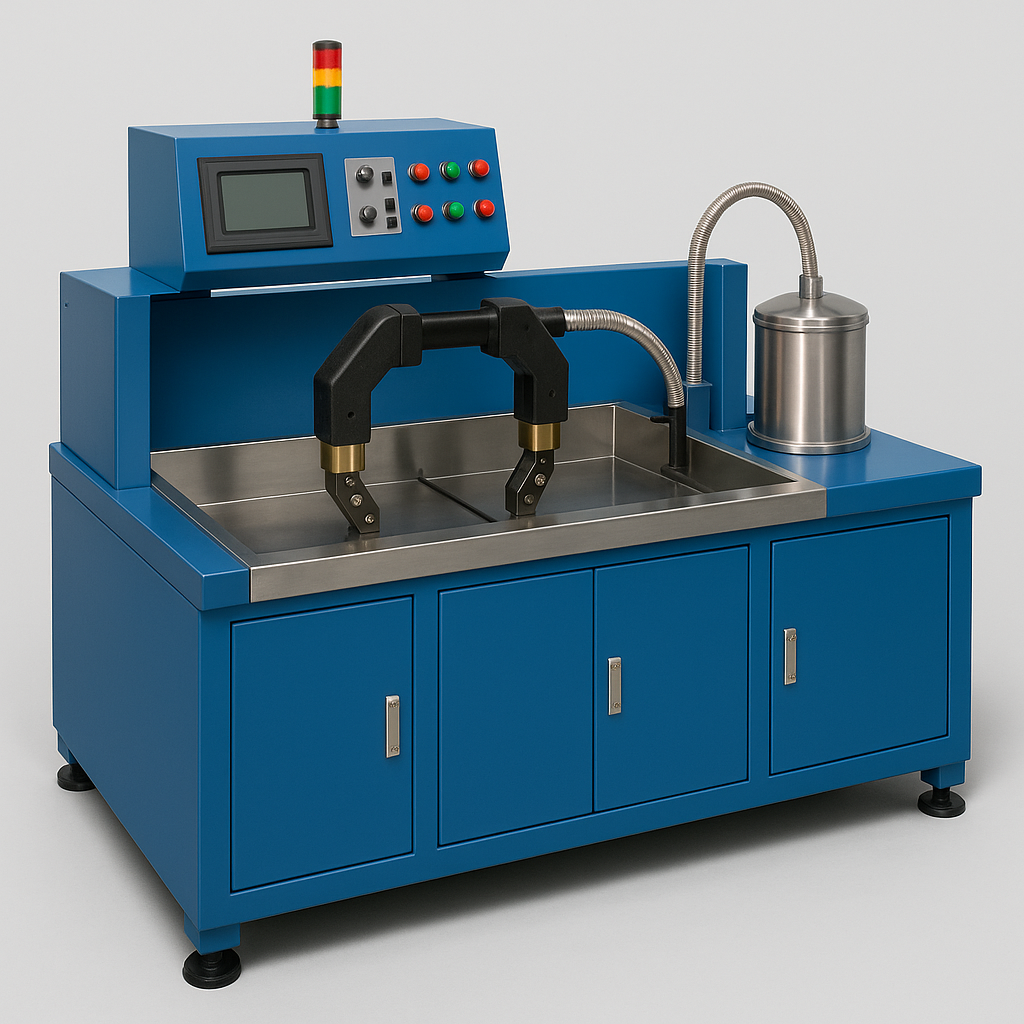
Bench-Type Stationary System
Description
Bench-Type Stationary System: High-Volume NDT in a Controlled Environment
A Bench-Type Stationary System in Non-Destructive Testing (NDT) refers to a fixed, often custom-built inspection station typically found in a dedicated laboratory, workshop, or production line. Unlike portable systems, these are designed for high-volume throughput, precise control, and detailed inspection of components that can be brought to the system.
Key Characteristics
-
Fixed Installation: Permanently installed on a workbench or floor, often requiring dedicated utilities (power, water, air).
-
Robust and Durable: Built for continuous operation and heavy use in an industrial environment.
-
High Throughput: Designed to process multiple parts efficiently, often with semi-automatic or fully automatic features.
-
Controlled Environment: Located in a specific area, allowing for controlled lighting (e.g., dark rooms for fluorescent inspection), temperature, and cleanliness, which are crucial for consistent NDT results.
-
Integration: Often integrated with other processes like cleaning, drying, and material handling systems.
Components and Examples
Bench-type stationary systems are common in various NDT methods:
-
Magnetic Particle Inspection (MPI):
-
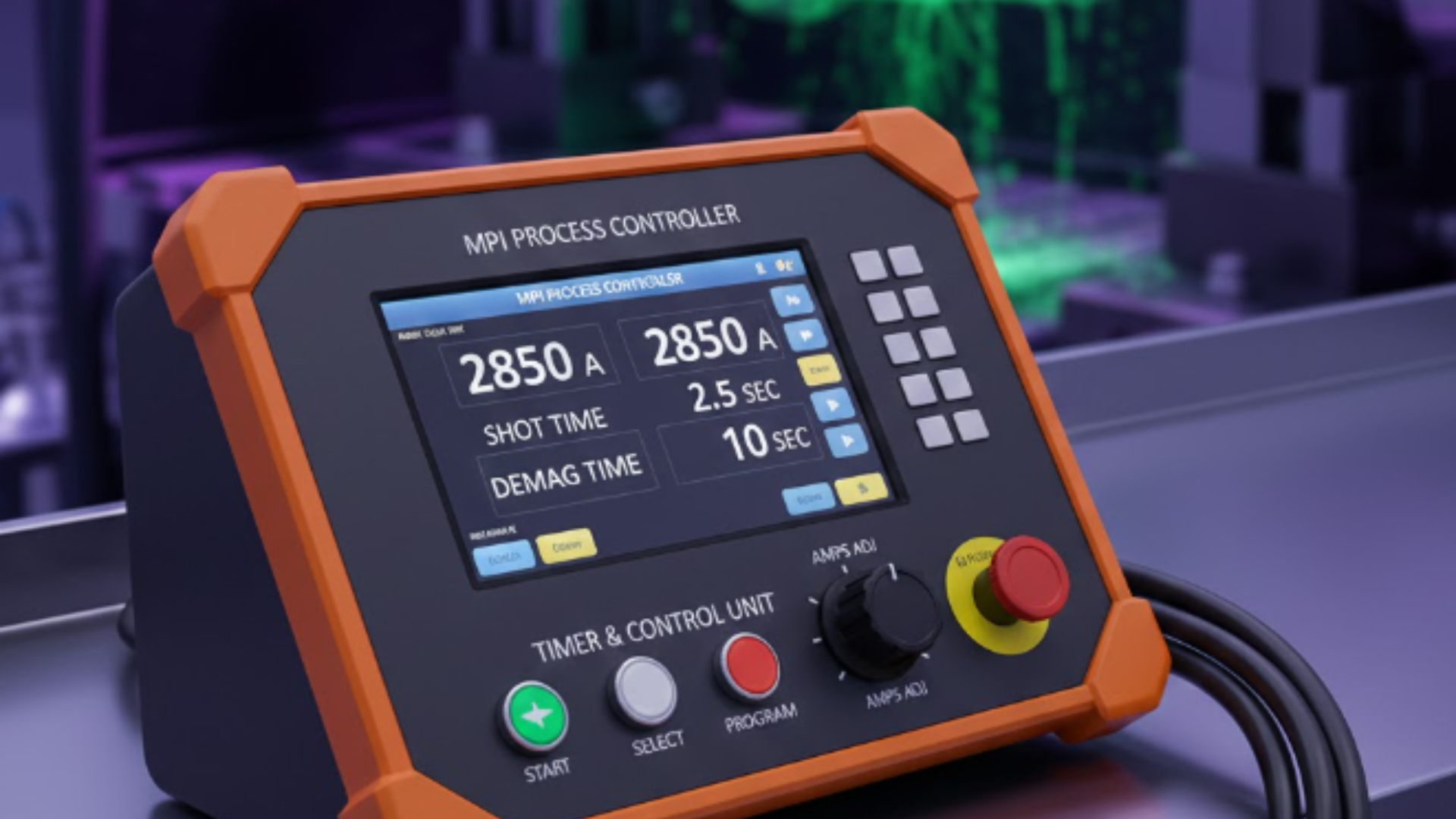
Horizontal Wet Benches: These are the most common example. They feature a headstock and tailstock to hold the part, built-in magnetizing coils, current output for circular magnetization (via prods or clamps), a recirculating wet bath system for applying magnetic particles, and often an integral UV light hood for fluorescent inspection.
-
-
Liquid Penetrant Inspection (LPI/PT):
-
FPI Processing Lines: For fluorescent penetrant inspection, these benches consist of multiple stations: pre-cleaning, penetrant application (immersion tanks), dwell, emulsification, rinsing, drying, developer application, and finally, a dedicated dark inspection booth with high-intensity UV lamps. These can range from manual multi-tank setups to fully automated conveyor systems.
-
-
Ultrasonic Testing (UT):
-
Immersion Tank Systems: For automated or semi-automated UT of complex geometries. The part and/or transducer are submerged in water (couplant), and a scanning bridge precisely moves the transducer for detailed inspection.
-
C-Scan Systems: Integrated with immersion tanks or other scanning frames to generate detailed graphical representations of internal flaws.
-
Advantages
-
Reproducibility and Consistency: Controlled conditions and automated sequences lead to highly consistent and repeatable inspection results.
-
High Sensitivity: Optimized conditions (e.g., dark rooms, stable power) allow for the detection of smaller, more subtle defects.
-
Ergonomics and Safety: Designed for operator comfort and safety during repetitive tasks, with features like exhaust ventilation and safety interlocks.
-
Data Acquisition: Often integrated with advanced data logging and reporting capabilities for traceability.
Bench-type stationary systems are indispensable in manufacturing, overhaul, and repair facilities where consistent, high-quality NDT is paramount for critical components.

Reviews
There are no reviews yet.