
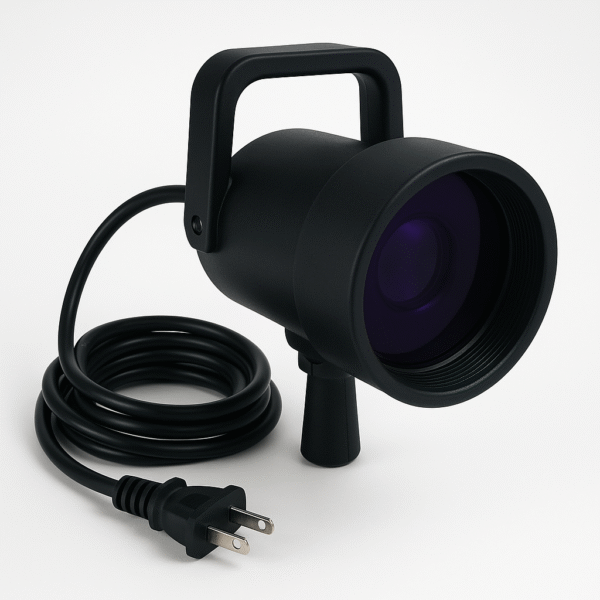
UV Inspection Lamp
Assured
Returns
Enquiry
Support
UV Inspection Lamp: The Black Light for Fluorescent NDT
A UV Inspection Lamp, commonly known as a Black Light in the Non-Destructive Testing (NDT) industry, is a specialized light source that emits Ultraviolet-A (UV-A) radiation. It is an indispensable tool for all fluorescent inspection methods, specifically Fluorescent Magnetic Particle Inspection (MPI) and Fluorescent Penetrant Inspection (PT/FPI).1
Function and Principle
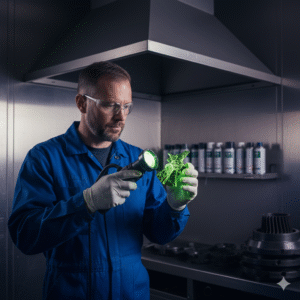
The primary function of the UV lamp is to cause fluorescent materials to glow, or fluoresce, which makes defect indications highly visible to the inspector.
-
Wavelength: NDT lamps are designed to emit light predominantly in the UV-A spectrum, specifically peaking at a wavelength of 2$365\ \text{nanometers (nm)}$.3 This wavelength is ideal for exciting the fluorescent dyes in the penetrant or magnetic particles without causing excessive visible light glare.
-
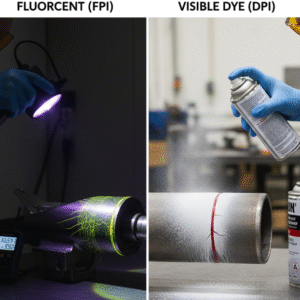
Fluorescence: When the UV-A radiation strikes the fluorescent material gathered in a defect (a crack or discontinuity), the material absorbs the energy and instantly re-emits it as light in the visible green-yellow spectrum, creating a brilliant, high-contrast indication against the dark background.
Technology and Key Specifications
UV inspection lamps have evolved significantly, moving from older, less efficient technology to modern LED units:
| Feature | LED UV Lamp (Modern Standard) | Mercury Vapor / HID Lamp (Older Technology) |
| Output Wavelength | Highly focused at $365\ \text{nm}$ | Broader spectrum, requires filtering |
| Intensity | High, often exceeding $5000\ \mu W/cm^2$ | High, but intensity decays quickly |
| Warm-up Time | Instant On/Off | Requires 5–15 minutes to reach full intensity |
| Heat | Low/Cooler operation | Generates significant heat |
| Portability | Excellent (Battery-powered handheld torches common) | Poor (Bulky, often AC-powered) |
Compliance and Measurement
The performance of the UV inspection lamp is critical to the reliability of the NDT result and is governed by strict standards:
-
Measurement: This intensity must be regularly checked using a UVA Radiometer to ensure compliance.
-
Safety: Inspectors must wear UV protective goggles whenever the lamp is in use to safeguard against eye exposure.
No Reviews Yet
Be the first to share your experience with this product.
Get a Quote for UV Inspection Lamp
Our NDT specialists will respond within 24 hours with pricing, specifications, and lead times. For urgent requirements, reach us directly via WhatsApp or phone.